
Trishul
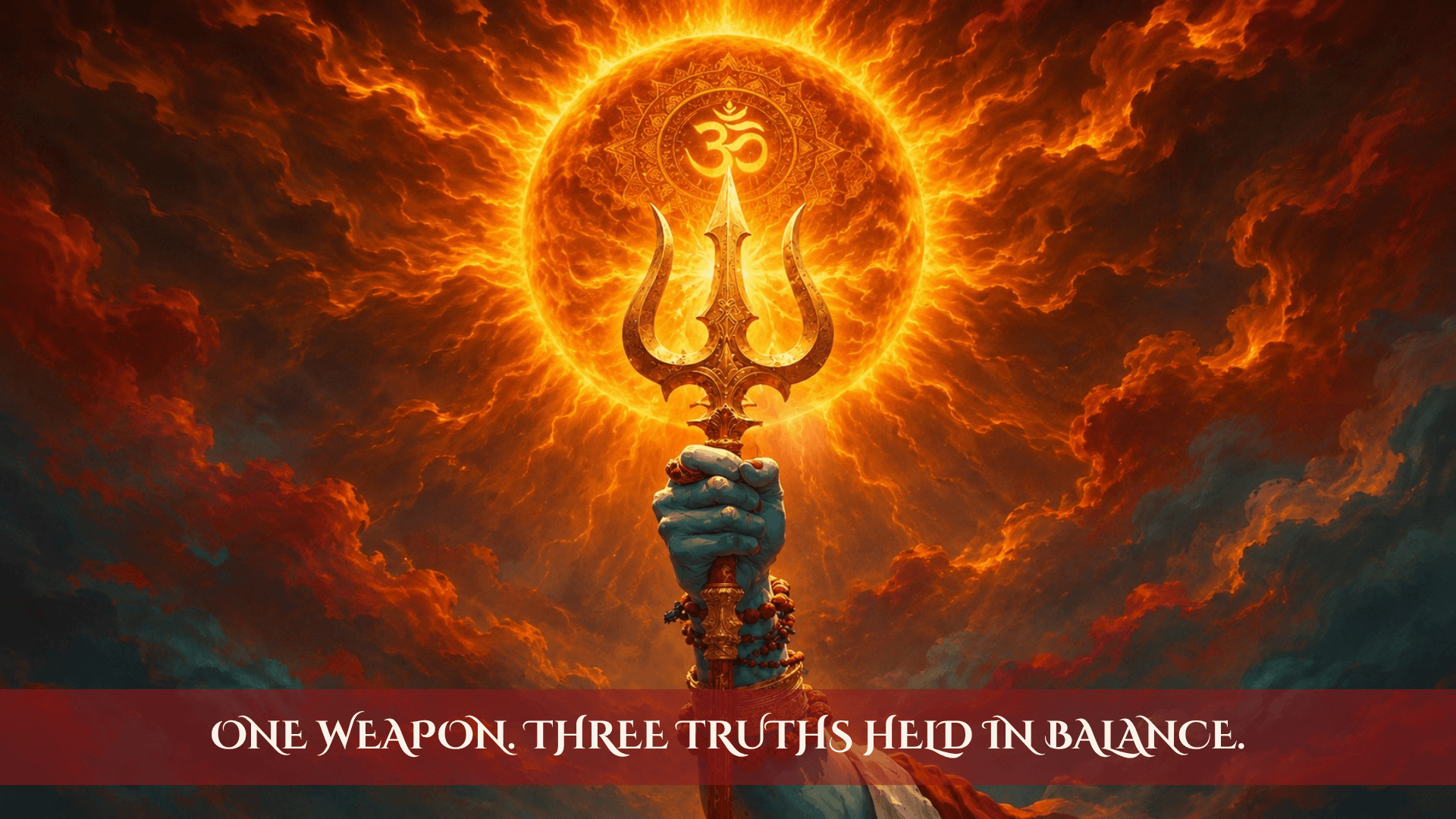
विजयो नाम रुद्रस्थः शूलः स्वलङ्कृतः।
यमराजस्यानुपृष्ठेन याति तीक्ष्णस्त्रिशिखः
शुभलक्षणैः सिन्दूरादिभिश्च समलङ्कृतः॥
– Mahabharata – Vana Parva, Adhyaya 232
Behind Yamarāj moved Vijaya, the terrifying trident of Rudra—splendidly adorned, razor-sharp, and crowned with three points. Decorated with vermilion and other auspicious markings, it followed closely behind Yamarāja.
Among the most powerful symbols in Hindu tradition, Lord Shiva’s Trishul represents cosmic balance, divine strength and the eternal rhythm of existence. More than a celestial weapon, its three prongs embody the fundamental forces that govern the universe. According to a traditional account in the Vishnu Purana, the origin of the Trishul is linked to Surya, the Sun God.
Surya was married to Sanjna, daughter of Vishvakarma, the divine architect. Unable to bear the overwhelming brilliance of her husband’s radiance, Sanjna sought her father’s help. Understanding her distress, Vishvakarma reduced Surya’s radiance to one-eighth of its original intensity. The immense celestial energy released in this process was transformed by Vishvakarma into divine weapons for the gods. Among them was the Trishul, gifted to Lord Shiva. The same divine radiance also gave rise to Lord Vishnu’s Sudarshana Chakra, Kubera’s palanquin and Kartikeya’s sacred lance. Beyond its celestial origin, the Trishul carries profound spiritual significance through its three points.
The Three Cosmic Forces — Creation, Preservation and Destruction –
Its three prongs represent the fundamental acts that govern existence: Creation, Preservation and Destruction. Together, they signify the eternal cycle through which life emerges, continues and transforms.
The Three Gunas — Sattva, Rajas and Tamas
The Trishul symbolises the three qualities of nature: Sattva, representing purity and harmony; Rajas, representing passion and action; and Tamas, representing inertia and darkness. These forces coexist and shape all aspects of existence.
The Three Dimensions of Time — Past, Present and Future
Its three points also represent the Past, Present and Future. Lord Shiva, revered as Mahakaal, is the one who transcends all dimensions of time.
Held in the hands of Lord Shiva, the Trishul is a reminder that true power lies in maintaining balance between opposing forces. It represents the wisdom to overcome ignorance, embrace transformation and recognise the interconnectedness of all creation.
The Trishul is more than a weapon; it is a symbol of cosmic harmony. Three forces, three dimensions and three eternal truths — held together by the divine power of Lord Shiva.